

Whom modern Russia labels criminals — and whom it labels heroes
Another horrific sentence has been handed down to a very young man — only 23 years old.
On August 31, 2026, Timofey Panchenko was sentenced to 20 years in prison: the first 4 years in a prison facility, the rest in a maximum-security penal colony. He was convicted on charges of sabotage, high treason, participation in a terrorist organization, calls for terrorism, and extremism.
Twenty years — for someone who has not even turned 24 yet.
But before looking at this intimidating set of charges, let us look at the “dangerous criminal” himself.
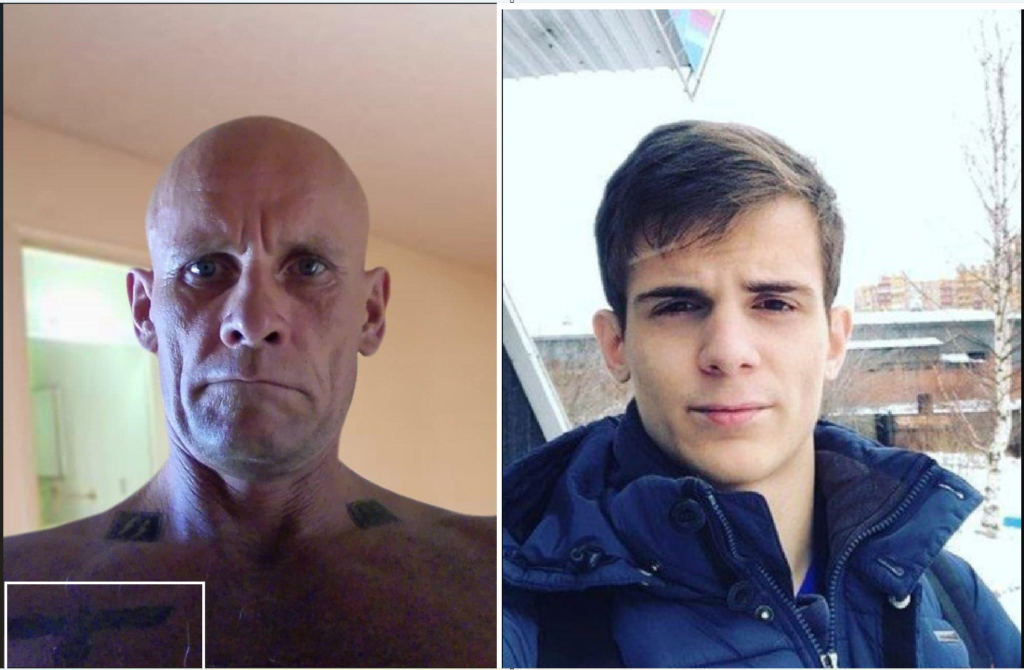
Timofey Panchenko lived in Irkutsk. He was interested in chess, science, foreign languages; he played guitar, wrote electronic dance music, and had been interested in Taoism since around the age of 14. Journalists found anti-war and opposition-minded statements on his social media, as well as critical comments about the Russian authorities.
This is the kind of person the state sends to prison for 20 years at the age of 23.
What is most striking is that the public barely knows what, specifically, he is supposed to have done.
The details of the charges are almost entirely absent from the public sphere. Panchenko himself wrote from pretrial detention that his “terrible crime” consisted of “photographing a piece of cardboard,” and claimed that he was being persecuted for his opposition views.
We cannot assert that the entire case was fabricated without seeing the materials of the closed trial.
But that is precisely the problem.
The state demands to be believed on its word alone: we are told that this is a saboteur, terrorist, extremist, and traitor — and therefore a 23-year-old man must give the next 20 years of his life to prison.
Now let us look at whom the same state regards as real heroes.
Hero of Russia Dmitry Utkin
The first — and almost grotesquely revealing — example is Dmitry Utkin, a Hero of the Russian Federation and one of the commanders of the Wagner private military company.
Utkin was known for his affinity for Nazi German symbolism. Photographs attributed to him show tattoos with SS and Wehrmacht imagery, while internal documents from Prigozhin’s structures repeatedly show his resolutions ending with the double SS rune. The same materials also contain his address to Yevgeny Prigozhin: “Heil Petrovich!”
But even that is not the worst part.
In the official European Union sanctions act, Utkin, as a Wagner commander, is described as being responsible for torture, extrajudicial executions, and killings.
It also cites testimony from a former Wagner fighter according to which Utkin personally ordered that a Syrian man be tortured to death and that the ordeal be filmed.
And it was precisely this man whom the Russian state awarded its highest distinction — the title of Hero of the Russian Federation — and invited to the Kremlin.
Let us compare.
A 23-year-old young man: chess, foreign languages, electronic music, science, philosophy — 20 years as a terrorist, extremist, and traitor.
Utkin: SS symbolism, torture, and extrajudicial executions — Hero of Russia.
But Utkin is far from an isolated case.
This is already a mass phenomenon
The Russian state sent thousands of prisoners to war, including people convicted of murder and other grave violent crimes. Many were pardoned or released and returned home with the status of war participants.
And then some of them began to kill, rape, and torture again.
By the end of 2025, journalists had counted more than 900 criminal cases involving returning participants in the war. At least 551 people were killed, and another 465 suffered severe injuries.
Behind those numbers are concrete cases:
- Artem Buchin — after returning from the war, he killed his former wife and her 7-year-old daughter.
- Ivan Rossomakhin — after returning from the war, he raped and killed an 85-year-old woman.
- Farid Khalimov — he strangled a young woman, beat her, and hid her body in a refrigerator.
- Sergey Korytov — he doused a woman with a flammable liquid and set her on fire; she died.
- A returning contract soldier in the Bryansk region — raped his 10-year-old stepdaughter.
- A former convict who returned from the war in Tuva — held and tortured his former girlfriend for 5 days.
- Other cases include the murders and rapes of 8-year-old and 11-year-old girls, as well as murders of women, relatives, and random people.
This can no longer be explained away as isolated exceptions.
In other words, the state brought men back from the war, and some of them committed the most serious crimes again.
At the same time, participation in the war, state decorations, and combat wounds were, in a number of cases, treated by Russian courts as mitigating circumstances.
This is where the system’s values become especially clear.
On one side — a young man interested in music, languages, chess, science, and philosophy, who criticizes the authorities.
He gets 20 years.
On the other — a man associated with SS symbolism, whom an official international document links to torture and extrajudicial executions.
He becomes a Hero of Russia.
And around them — hundreds of returning war participants whose crimes have already left more than a thousand people dead or seriously injured.
So who is the hero, and who is the criminal?
That is why the Panchenko case matters not only as the story of one young man.
It forces a far more disturbing question:
By what moral coordinates does today’s Russian state decide who is a hero and who is an enemy?
Whether we like it or not, a state’s legal and moral distortion is determined by who holds power, what values that person follows, and how long they are able to turn those values into state norms.
Vladimir Putin has stood at the head of Russia’s political system for more than a quarter of a century.
Under him, a system was built in which participation in war became a way out of prison, a basis for pardon and leniency, and people with the gravest criminal pasts were publicly described as “heroes” and a “new elite.”
And the longer such a system exists, the clearer its notions of heroism and treason become.
Its heroes increasingly resemble the system that selects them.
And its “traitors,” “extremists,” and “terrorists” increasingly turn out to be people who think differently, ask questions, and try to understand the essence of what is happening.
Of course, chess, foreign languages, or philosophy do not by themselves make anyone innocent. That is exactly why we must look not at state labels, but at facts.
Panchenko — 23 years old and 20 years in prison.
Utkin — SS, torture, extrajudicial executions — Hero of Russia.
Buchin — returned from war and killed a woman and her 7-year-old daughter.
Returning war participants — hundreds of criminal cases and more than a thousand dead or seriously injured.
Look at whom the authorities call criminals.
Look at whom they call heroes.
And after that, it becomes much easier to understand what this power really is.
Source: Politzek Info — https://t.me/politzekinfo/9817